Monday, April 1, 2019

Just an Ordinary Mom


My daughter, Cindy, was recently chosen Alaska Mother of the Year.  I am so proud of her.  She, however, is feeling totally unworthy of the honor. 

“I haven’t done all those great and wonderful things that the other mothers have done,” she said.  I haven’t started charities or schools or businesses.  I’m just an ordinary mom.  What’s more, I lose my temper with the children.  Sometimes I’m so tired of their fighting I just send them outside.  I complain and cry.”

Maybe she is just ordinary, but she has done the small and simple things that lead up to great motherhood, often under very difficult circumstances.   As have you.

“Wherefore, be not weary in well-doing, for ye are laying the foundation of a great work.  And out of small things proceedeth that which is great.” 1 

So how do you eat an elephant?


Image by edbo23 from Pixabay
One bite at a time!
How do you climb a mountain?
How do you learn to play the piano?
How do you become a great mother?

Great and marvelous events seem to motivate us, and small things often do not hold our attention.  However, small simple acts sustained over long periods of time can help us grow our muscles, increase our abilities, tame our temper, let a child know he is loved.  An act of kindness, an inspired response, an effort made over and over and over, sustained over time becomes a source of great power and influence for good.

Performance and accomplishment are rarely the result of gigantic and dramatic efforts expended in a relatively short period of time.  We don’t eat that elephant all at once.  Little baby steps, when taken consistently and persistently, lead to effective performance and satisfying accomplishment.

Many people seek for promises of big results that occur quickly and all at once.  Look at the sales of lottery tickets.   Recall claims of advertising messages promising immediate weight loss.


We are offered instant health, luxurious hair, sudden wealth, and a more youthful appearance in just 14 days.  We want the rewards without the efforts.  We want to be perfect mothers now.  We don’t want to be tired, frazzled, cranky, and angry.  We want to be Mary Poppins.  We want to be that perfect Mother of the Year, with 10 children all dressed impeccably and excelling in every field, with a spotless house and an active life outside the home, as well as inside.  We are tired of the baby steps that don’t seem to get us anywhere.

We shouldn’t be impatient with ourselves when we blow it.  The beautiful thing about life is that if we don’t like the way we have done things in the past, we can change.  “Never let the things that could have been get in the way of those that still can be.” said Neal Maxwell.  The only purpose of looking back at the small failures of the past is to encourage us to make the small changes that will lead to small acts of goodness and rightness that will lead to great mothering in the future.

Sometimes we, as mothers, are so weary with whiney children, unending messes, constant demands, and too little sleep, that we can’t seem to be able to do even the routine things. 
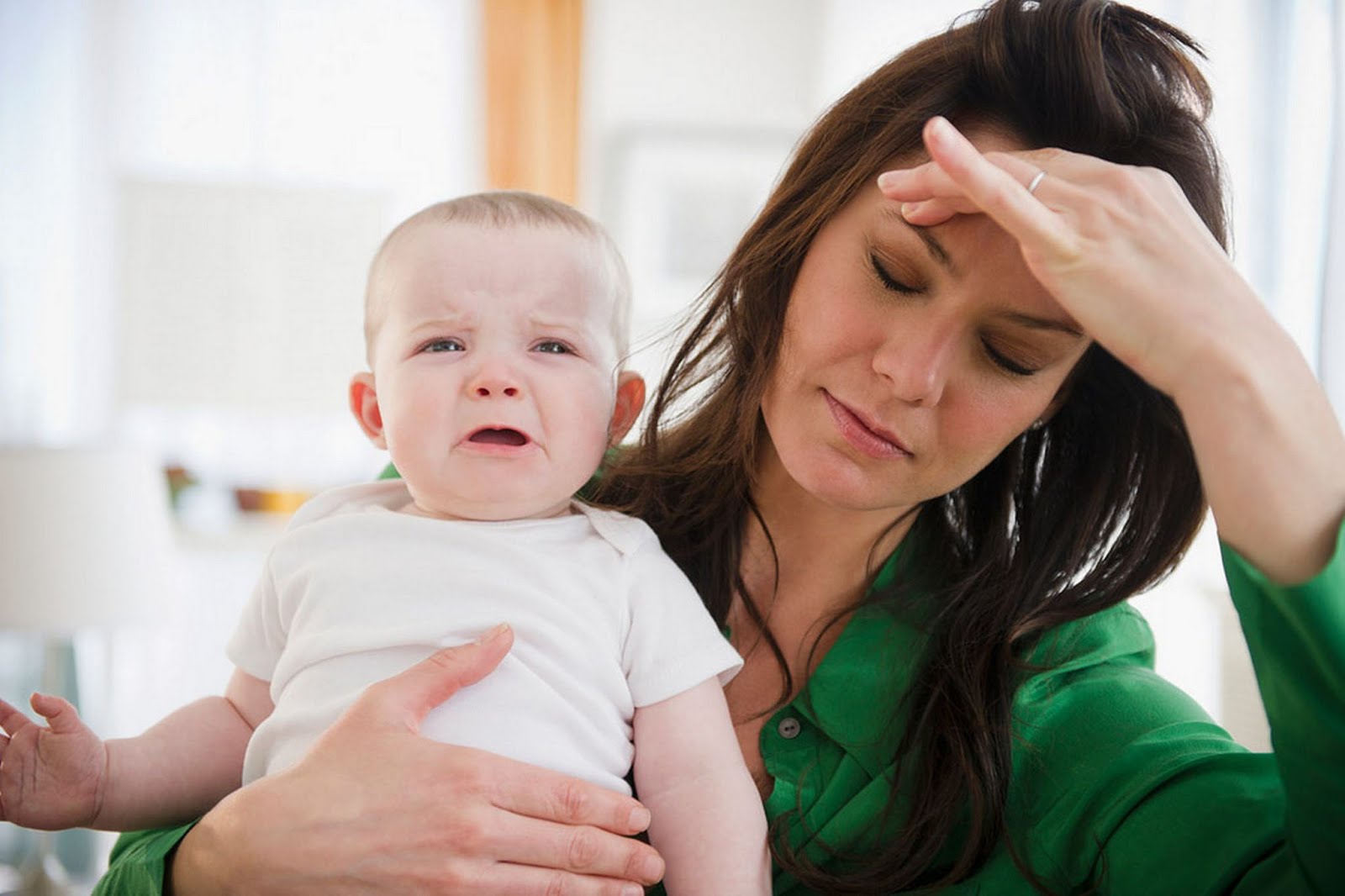

I remember knowing it was time to fix supper and thinking it was just a too big job to do right then.  (I was pregnant with child number four, it was hot and we didn’t have air conditioning, plus in spite of cleaning all day, the house was a mess.  You get the picture.)  I thought if I could just chose one small step toward the goal of edible food on the table, it would give me the impetus to continue.  I decided I could set the table.  Then, while I was up and in the kitchen, I was able to look in the refrigerator and figure out what to fix.  Of course it would have all been easier if I had figured that out earlier and defrosted what I needed, but the point is that doing one small thing helped me tackle the larger thing.

I also learned that small baby steps can bless my family even when there isn’t time or effort available for the giant steps.  I could wash the smears around the light switch without waiting until I had time to wash the whole wall.  Maybe the whole wall needed washing, but just cleaning around the light switch was better than doing nothing.  Maybe you can’t clean the whole kitchen, but just clearing the counter will help.  Maybe you aren’t able to clean out all the drawers, but one drawer a week ends up with the same result.

Maybe you can’t teach your child to read before kindergarten, but reading a story tonight at bedtime will increase his love of books.  


Maybe a quick hug or a brief word of praise is just what your child needs.

Cindy has done these small and simple things, often under extremely difficult circumstances.  She lives off the grid, without running water, sewage system, electrical connections.  She feeds her children healthy food, but that means she raises chickens, grows a garden in amended gravely soil with specially chosen plants that will mature in the short Alaskan summer, bottles the food, occasionally butchers a half a cow or a pig, smoking bacon and rendering the fat for cooking and for soap.  She keeps her children in clean clothes but that means many buckets of pumped water heated on the stove and wet clothes hung on pegs over the wood stove to dry.  


She home schools her children, following their own pace and their own interests to make learning exciting.  She takes them to extracurricular lessons in the nearest city 2 hours away or to the museums in Anchorage 3 hours away.  They were getting too old to share their loft bedroom, and due to her husband’s illness, he needed a downstairs bedroom, so she and her husband built by themselves an addition to the cabin.  The children help with the chores and are learning independence, responsibility, and adaptability. 

Cindy’s husband has epilepsy which can’t be controlled by medication.  She has learned how to care for him and as a former nurse, has protected him from local inexperienced doctors that want to treat him in a way that will harm him.  She has tried natural remedies, learning how to titrate the oils of natural plants, that seem to help.  When I talked to her the other day, she said her water pump was leaking, her husband had had a cluster of seizures over that past few days, they were out of propane and firewood, and she had to go cut a tree.

Your challenges are probably different.  You may have never needed to cut a tree.  But you may be a single mother, or have a spouse that battles addiction.  You may have a debilitating illness, or you may have an ill child.  You may be financially precarious and wonder if you’re going to make it.  You may be caring for parents in addition to your children, have interfering in-laws, or other toxic relationships, or a rebellious teenager that is harming the whole rest of the family.  But as you struggle on, doing the small and simple steps of motherhood, you are doing something great.

Even if you don’t have extenuating circumstances, mothering is just hard.  It’s hard when your children are sick, it’s even harder when you don’t feel well, it’s hard when they make constant messes, it’s hard when they don’t obey, it’s hard when you don’t have time to do what you want to do, it’s hard when you have to punish, it’s hard when they need help with homework they don’t want to do, it’s hard when they won’t eat what you fix, 


or won't go to bed without getting up numerous times, or chose friends that are not a good influence, or have a blow-out diaper, or…ad infinitum.  It’s hard when the little ones wake up too early, or the older ones stay out too late.  It’s hard when we are so tired we only want to plop, but we have to take them to their piano lessons, or soccer game, or pick them up from a friend’s house.  

Often, when it gets so hard, we think it must be our fault…if we were just more patient or wiser or stronger or something-er, it wouldn’t be a problem.  We worry that our own inadequacies may affect our children so they won’t be okay.

“The fact that you keep going, keep cuddling, keep cleaning, keep planning and keep loving in spite of how hard it is, is your super power.  You’re doing the hardest job on the planet with dedication, grace and love—and there is nothing wrong in that.”2

Jane Clayson Johnson, who left a fast paced TV journalist life for the life of being a mother said, “The sanctity of motherhood can be hard to appreciate when you spend endless hours making peanut butter and jelly sandwiches, singing along with Elmo, helping create elaborate science projects or enforcing late-night curfews. 

“Motherhood is full of small, mundane tasks.  There is no one to cheer when you finally fold the last load of laundry.  


But underneath the cooking, cleaning, reading, chauffeuring, nursing and so on is a mother’s real occupation.  That is loving, nurturing, and teaching her children.  The seemingly small things we do while our children are young—teaching them to pray, reading them a story, telling them how much we love them—tend to stick with them throughout life.” 3

A friend recently got a letter from her grown-up daughter thanking her mother for her constant love and stalwart standards throughout her turbulent teen years.  She said that although she fought every rule and even against the love at the time, it gave her a basis to come back to as she matured.

Mothers teach and model what Alexis de Tocqueville, social historian, called “the habits of the heart,” the civilizing “mores” or attitudes that create a sense of personal virtue and duty to the community, without which free societies can’t exist.

Johnson stated that “we go into motherhood expecting that it will require some strength; then we find ourselves in it and realize we’re completely out of breath—with miles to go.  Being “just an ordinary mom” is an extraordinary test of endurance and strength.

Our sacrifices, doing the small things we don’t want to do, may appear to be insignificant, but they are important.  

photo from Max Pixel

In a sense, our small and simple acts of mothering are the threads that make up the masterpiece tapestry of our children’s lives.  We may not see the whole pattern yet, and we don’t need to.  We just need to remember to take that one stitch at a time, and out of small things will come that which is great, woven by just an ordinary mom. 


1. Doctrine and Covenants 64:33
2.  Diana Spalding Dear mama: You’re not doing it wrong, it’s just “that” hard Motherly 
 Https://mother.ly/life/dear-mama-youre-not-doing-it-wrong-its-just-that-hard
3.  I Am A Mother Jane Clayson Johnson, Deseret Book, Salt Lake City 2007

Friday, March 1, 2019

To Grandmother's House We Go


My Dad was in the Air Force, so we moved around the U.S. often.  Both my grandmothers lived in California, so we traveled to see them in summers and at Christmas in our trusty Ford station wagon, singing “Over the river and through the woods…”.  Seeing my grandmothers was worth the hours and days in the car with my siblings as we traveled across the country.


Whether they call you grandma, nana, oma, granny, nanny, graham cracker, or any other special name, let’s be sure they call you with love and anticipation.  How do we become a Grandmother they will want to be with and listen to?

First off, let’s talk about spoiling our grandkids.  Is that a given, or a no-no?  Well, yes and no.  When I polled family and friends on what made their relationship with their grandparents special, it was often the spoiling they remember.  “She let me eat anything I wanted.”  “We always baked cookies together.”  “She took us exciting places.”

However, parents of these grandkids asked, “How can we keep our parents from spoiling our children?”

So I’ll give you my opinion from my position of being a grandchild to two wonderful Grandmas, a parent to children who had two wonderful grandmothers, and now being a grandma myself.  It’s OK to spoil your grandchildren—a little.

Parents have the job of teaching and raising and setting rules and enforcing those rules.  Grandmas have done all that, now they can relax the rules—a little.  There are a couple of guidelines to watch for when spoiling.

1.       Don’t undermine the parents.  Never make it you and the kids against their parents.  Telling them to keep what you do a secret teaches disrespect and disobedience to the people who are raising them.

2.      Keep the indulgences small and simple.  Don’t give your grandchildren more gifts than the parents do.  Check before giving expensive gifts.  One mother complained that the child’s grandmother gave her daughter so many gifts, she now expects to buy everything she sees. The mother was tired of being the bad guy by saying “no”.  Besides, she wanted her daughter to appreciate what she had, not focus on what she coveted.  An unexpected sweet treat now and then is OK, but not cake and cookies for breakfast, a steady diet of ice cream, and all the candy they can eat.  Grandchildren require the necessities of life and an occasional splurge, but not getting something they want can build character and prepare them for life’s realities.

3.      Follow the rules that are important to the parents.  No scary or violent TV shows or video games.  No candy that is a choking hazard.  Always buckle up in the car or stroller.  Don’t allow teens to stay out after curfew, or be with friends of which the parents disapprove.  One of my daughters asked her in-laws to not feed her daughter any sweets.  The in-laws thought, oh, a little bit won’t hurt, and put honey on her oatmeal, a cookie with lunch, and a small piece of candy in the afternoon.  Her daughter had very sensitive teeth because of toddler mineral loss and by nighttime she had a raging toothache.

4.      Don’t buy toys that don’t reflect the parents’ values.  This may include inappropriate video games and movies, toy guns, or toys with a strong gender bias.  One mother said, “My in-laws try to buy the grandkids’ affection by giving them expensive electronics when we would rather that they have toys that encourage them to be active and creative.”1

5.      Don’t try and buy their love.  That teaches them that they aren’t loved if they don’t get everything, and they are more likely to “use” people by expressing love in order to get gifts.

6.      When planning trips, overnights, pets, and other major delights, clear them with the parents before announcing to the children.  Don’t make the parents the bad guys by having to say no in front of their kids.

7.      Never favor one child over another.  This is especially necessary in blended families.
What you can give freely with no worry about unintended consequences, is your unconditional love, your undivided attention, and your time.  Rather than giving a toy and watching the grandchildren play, we can play with our grandchildren.

Grandparents have a different objective than parents do.  Parents shape, mold, discipline and guide their kids into high achievement and perfection.  Grandmas can shower those children with a simpler, less demanding love.  Research suggests that the unique acceptance children feel from their grandmothers benefits them emotionally and mentally.

Often, the grandmother’s role is indirect, by helping and supporting their grandchildren’s parents.  They step in during family disruptions, such as a parent’s illness or a new baby.  They are babysitters, stress buffers, supporters, and roots.

Grandmothers can play with their children.  
Too much love never spoils children.  Children become spoiled when we substitute “presents” for “presence”.  Children love it when we play with them.  We can play board games, from “Chutes and Ladders” for the preschool ones (although you may have to cheat to keep the little ones from getting too frustrated when they slide back to the beginning), to Chess with the older ones.  We can play card games, from “Go Fish” to teaching them canasta.  We can play action games like “Hide and Seek”, “Duck, duck, goose”, “Fox and Hound”.  We can give horsey rides, play “Ring around the Rosie”, take nature walks that don’t have to hurry, go on scavenger hunts together, play finger games.  My grandkids love playing “Peaky, Fousty, Flatty, Cutty, Claw” that I learned when my father-in-law played it with my children (google it).  We can do crafts with them, science experiments, and service for others.

We can even have them teach us a two-player video game, or at least explain it to us.


Grandmothers can look at life with a long-term perspective.  
We’ve learned to not sweat the small stuff: life is too short.  Grandchildren may think some small problem is the end of the world.  As long as we don’t dismiss their feelings and the importance the problem is to them, we can help them put their problem in a broader viewpoint.  We can relieve their minds.

Grandmothers should tell stories.  
Folk tales like the Gingerbread Man, The Little Red Hen, The Three Little Pigs with morals they may have never heard in TV or in video games.  Made-up stores, especially if they are the heroes.  My children loved visiting a mythical Candy Land, picking cookies off the trees, lollipop flowers, sliding down a Jell-O rainbow, drinking whatever they wanted from a “water” fountain.  Reading books, even over and over and over again.  


They love stories from our own childhood and how things were different then.  Whether they are informative, humorous, or tragic, these stories make us more real to our grandchildren.  You can even write your personal history for your children and grandchildren.  Seeing that we survived trials gives them hope that they can do the same.  Stories from history, or from scriptures.  True stories from family history.  I once made a coloring book about an ancestor who came to America from Sweden by herself, to give to my grandchildren.  It showed storms on the North Sea when she was lashed to a mast, to crossing the plains of Nebraska and Wyoming.  They better appreciated the effort she made to enjoy the blessings of living here in America.

Kim Bishop of Charlotte, North Carolina says, “I loved hearing about how my grandparents grew up and how it was different from my childhood!”  “It’s really interesting to learn about the people who came before me and made my family who we are today,” says Katie Matza of Shreveport, Louisiana.2
Share family photos too.  Family stories and photos let our grandchildren know they are a part of something larger than themselves.  Much psychological pain is related to feeling isolated, alone, adrift and unconnected.  Having a sense of heritage makes children less prone to such feelings. 

Grandmothers give love unfeigned and unconditional.  
Parental love can be complicated.  It tends to be all bound up with hopes and expectations, egos, and ambitions for children.

Grandmother love is a little simpler.  We’ve lived long enough to know that our lives seldom go the way we want.  Rather than marching straight down the pathway to success, our grandchildren may falter, take side trips, fall back.  That is when they need a little extra love.  A close relationship with grandparents helps them grow in confidence and makes them feel worthy.  It gives them security and hope in the ability to straighten out their course.3

Grandmothers can give a listening ear.  
One grandma said the best way to spoil your grankids is to “listen louder” to them.  Listening, she says, helps children feel safe enough to share their feelings, their worries, and whatever else is true for them.4


Researchers say that when younger generations find their elders lack social tolerance, a generation gap can develop.  We don't need to abandon our values and standards, but being willing to listen to our teen grandchildren without challenging them, can go a long way.  We may even be surprised at the depth of their thinking.  I have learned that the way that is best for me may not be the way that is best for my children or grandchildren.  It is a hard but necessary lesson.  Humility demands that I at least consider their viewpoint.  If our teens have an open sounding board if only to be able to verbalize their feelings, it may help them see their path more clearly. 

Grandmothers can teach skills.   In today’s families, many skills go untaught simply because of a lack of leisure time in which to teach them.  We can pass on some of the skills we have learned.  Hopefully we are more patient than stressed-out parents, and because we grew up in a time where it was cheaper to repair or make it yourself, we have some skills that some parents lack.  Simple skills can be taught to young children, such as setting the table, folding towels, planting a seed, tighten a screw.  As they grow, they can learn more practical skills, such as making a sandwich or a cake, mending a torn hem or a ripped seam, 


washing the car and changing a flat tire, washing their own laundry, caring for their own garden patch, money management, whatever is a necessary practical skill or is in line with their particular interests.  Arts and crafts are fun ways to teach some skills.  We can also teach life skills.  Lauren Harrison of Houston, Texas, says “Because my grandmother grew up in the Great Depression, she learned to never waste anything—and it’s helped me save a lot of money and reduce trash.”2

Grandmothers who stay in frequent contact with their grandchildren have closer relationships.  Some grandmothers see their grandchildren daily or several times a week.  Others only get that pleasure once or twice a year.  Some, bless their hearts, have accepted the herculean task of raising their grandchildren and have to play parent as well as grandparent.

Not surprisingly, geographic closeness is one of the strongest predictors of a close relationship between grandparents and grandchildren.  But what if you live far away from your grandchildren, or due to health or financial problems, are unable to see them often?  I have twenty grandchildren.  I live in California.  None of them do.  They free range from Alaska to Massachusetts, from Idaho to Arizona.

Although I know that face-to-face interaction is best, technology has made it easier to keep in touch.  I joined Facebook and friended my grandchildren to keep track of their accomplishments and thoughts and activities.  Many grandparents Skype or FaceTime or use other video chat platforms in order to visit with their grandchildren.  


I heard a young mother say that her grandparents called or texted every week to check and see how she is doing, and how much that meant to her.  I hadn’t done anything like that, so I decided to text some of my young adult grandchildren.  To my surprise, most of them texted back.  I plan to continue that with the rest of them. 

A friend has an annual “Grandma’s Camp”.  Another chooses one grandchild to accompany her on a trip each year.  Others invite a group of like-aged cousins to visit for a while.

We can make phone calls, share videos, ask about school work and appreciate their art work, and make all the personal contact we can to build bonds of love and friendship with our grandchildren across the miles.  And don’t forget snail mail.  There is something about having a card or letter in hand that makes it extra special.  As a child, I saved letters from my grandmother that praised me.  They made me feel good.  You can even send your grandchildren a box of stationery or postcards and some stamps and become pen pals.  But don’t feel bad if they prefer to respond electronically—it’s easier.

Grandmothers come with years’ worth of wisdom, understanding, and love to share with their grandkids.  
They have life lessons and other advice because they’ve often lived through the same or similar experience.  “Knowing that they got through everything just fine, makes me feel that I’ll be okay too,” says one mother.2

One thing my father-in-law taught us about money management has become a family saying that is blessing generations.  He said, "There are two kinds of people: those who understand interest, and those who don't.  Those who understand it earn it, those who don't, pay it."  We are teaching that at a Cousins' Conference next month.

The relationship between a grandchild and grandparent is a very special one.  While we act as an authority figure and provide unconditional love, we also get to spoil our grandkids in a way parents simply can't.


  And we have incredible influence.  Take the time to really get to know and enjoy them.  They will in turn gain insight and character they can pass onto their own children and grandchildren someday.

1. Do Grandparents Have the Right to Spoil Grandchildren? By Susan Adcox, Feb. 7, 2018 
https://www.liveabout.com/grandparents-spoiling-grandchildren-1695777
2. 10 things Grandchildren can Learn from their Grandparents by Gillian Kruse, March 26, 2018 
 https://www.care.com/c/stories/5762/things-grandchildren-learn-from-grandparents/
 3. 4 Reasons Grandchildren need their Grandparents by Susan Adcox, Feb. 17, 2017 
https://www.liveabout.com/reasons-grandchildren-need-their-grandparents-1695883 
4. Listen Up, Grandma!  Go Ahead and Spoil your Grandchildren by Dina Rose, PhD, 2014
https://www.psychologytoday.com/us/blog/the-art-science-teaching-kids-eat-right/201412/listen-grandma-go-ahead-and-spoil-your