Friday, November 2, 2018

“Aw Mom, do I have to?” Chores!


"Aw Mom, do I have to?"

“I will in just a minute.”

“Wait until I finish this game (or the show is over, or I’m through talking on the phone, or…)”

Why does it seem like getting our children to do chores is like pushing on one end of a cooked spaghetti, and expecting the other end to move?  They are experts at procrastination, excuses, resistance and refusal.  We feel like angry nags, impotent parents, and frustrated tyrants.  It often seems easier to just forget their chores and do it ourselves.  But, despite what our children think, that isn’t going to do them any favors.  Our goal is not to give our kids what they want, but what they need.

Coddling a child, protecting them from having to work, running to school with their forgotten homework or lunch, and catering to their needs and wants teaches them to put themselves first, ignoring the needs of their parents, siblings, and friends.  They will feel “I have the right!”  If we are this protective parent, are we really showing love, or are we creating problems for our children in relationships and life?

A niece stated: “I really struggle with (giving my children) chores because I was the baby of my family by seven years and my mom spoiled me too much and hardly ever made me do chores.  This has made life difficult for me because I still have a hard time doing chores and making my kids do chores.  So I guess my advice is start young and don’t allow an only child or a youngest child get away with not doing chores.  It has been a real struggle.”


My daughter in Alaska buys milk shares from her friend Sariah who lives on a farm off the grid.  My daughter says Sariah’s children are hardworking, independent, and responsible.  I wrote to Sariah and asked her secrets.  I am going to quote part of her response, because she makes a lot of good points.

“My children contribute to our home and we all work together to make it run effectively.  It seems that somewhere along the way, children have forgotten how to be an active part of a family.  I think it is partly because they don’t have any “real” chores.  They are asked to dust and make up their beds and they don’t really know why they have to do that because it’s just gonna get dusty again and the bed will be unmade again each morning. 

My kids each have meaningful chores that directly relate to household needs such as food and warmth.  (They still have to dust and make their beds too.)

“Cole splits oodles of firewood for the kitchen stove so that we can eat.  I make hearty meals on that kitchen stove, and he can see a direct relation between cutting firewood and getting a good dinner and a treat.  Boys do love food!  So that’s an easy one.


“Aleah collects eggs and tends the chickens overall.  She is the baker.  We need eggs to bake!

“Violet has a hard time staying focused on any one thing.  She has a list of chores but she often switches with Aleah to keep things interesting.  I think she actually does a better job when she feels she can make a choice on what chores she does.

“The 3 and 5-year-old bring in the firewood and sweep up the mess it makes.  They are old enough to do it completely on their own now.

“My husband and I take care of the livestock.  It’s a crazy amount of work and I think it could burn anyone out, but we are insane enough to enjoy those chores.  The kids can take care of the livestock and often do when we are traveling.  In fact, Cole delivered a calf while we were at the state fair.

“I feel that the kids can see that we as parents are working hard for them and that we actually need their help.  I feel that they have self-worth because of their ability to kick in and make our work load easier.
“The funny thing is, they rarely complain about it.  I know that they see a difference in themselves and their peers.  They are strong, confident, and capable.

“We include them in all discussions about breeding choices, whether to do shows at the fair, and all the little detail things. But there is a balance between letting them make choices and having personal motivation, and still being the firm hand of the parent in charge.  I’ve always felt the children rise to high expectations.

We do take time for recreation.  I hope they can see that their feelings and comfort are important to us.  As a family I think they feel that we are all working towards a common goal.

My children get praise for doing the most basic of things that a normal turn-of-the-century child wouldn’t even think about.” 

Now most of us don’t live on a farm, and we definitely don’t cook on a wood stove and need our children to chop wood (and our kids don’t lose indoor plumbing privileges when chores aren’t done and have to use the outhouse.  In winter.  In Alaska.)  But it is true that children need to see the value of the work they do.  They don’t like busy work anymore than we do. 

“My kids each have meaningful chores…”

I remember when I was eleven and a neighbor who was building an addition on his house needed a big pile of odd shaped pieces of wood sorted.  All the neighborhood children pitched in and worked hard for a couple of hours.  We weren’t asked to do it (but allowed), we didn’t get paid, but it was important work and I felt really good when we finished.

I notice that when it is obvious that help is needed, children seem to be more willing to pitch in.  They become part of the team.  Single mothers and working mothers and mothers with large families really need the help their children can give, but no child should consider their mother a maid.  Perhaps explaining to them the importance of what they do and giving gratitude for their work in making the family home function would help them feel needed.  I remember wishing my mother would just say thank you for what I had done, instead of pointing out where I had fallen short.


“Even though children may say and act as if they don’t want to contribute to the running of the household,” writes Susan Tordella in Raising Able, ”everyone craves the feeling of feeling important, needed by, and connected to others.”  Encourage and praise with, “Thank you for helping out.  Our family makes a great team.”

“…she does a better job when she feels she can make a choice on what chores she does.”

Letting children have input on the chores seems to be important to them.  Children seem to be more cooperative if they have a say.  Of course there are chores that no one wants to do, but if they can come up with a way that those chores are rotated, they might be more willing to do them.  Brainstorm ideas on the problems too.  Get their input on procrastination, not being thorough, etc.

I hated housework, especially washing dishes.  But I loved yard work.  I would spend hours outside making our yard look nice.  My brother, on the other hand, said his favorite chore was doing the dishes with his younger sister.  “We would sing old dumb songs together such as ‘Down in the Valley’, ‘I Love the Wide Open Spaces’, etc.”  Working together gives a family a chance to bond.

“They are old enough to do it completely on their own.”

Two lessons here: before expecting children to do a job on their own, they must be taught how to do it.  They should be shown what to do, how to do it, and how well it needs to be done.  My sister would place posters in each room explaining just what was needed to clean that room.

Also, children should be given age-appropriate chores.  Most can do more younger than we give them credit for.  

                                   Boy helping wash up after his three-year-old birthday party.

I remember my granddaughters (3 and 5) climbing up on the bathroom counter to clean the bathroom sink and wipe down the counters.  My sister-in-law says her children could strip their beds every week and carry the sheets to the laundry by age five.  My own children started doing their own laundry pre-teen (after I shrunk a sweater one had bought with their own money).  

See this video of Sariah's toddler feeding the cows.  I think you'll need to copy and paste.
https://www.facebook.com/sariah.naff/videos/1707989589229488/

“…we are insane enough to enjoy those chores.”

If parents own a positive work ethic, then we’re already halfway there.  Our homes are a natural and continuous learning environment.  Everything we do instructs our children, whether intended or not.

Another sister-in-law said “I found the most effective way to teach children to work is to work beside them.  We canned fruit, washed walls, mowed lawns, all as a family when I was a child.


“…they have self-worth because of their ability to kick in and make our work load easier.”

Kids feel competent when they do their chores.  A 75-year Harvard study showed that children who are given chores became more independent adults.  Doing everything for a child teaches them that they are not capable.  How sad to be a five-year-old who can’t button her own coat at kindergarten, or the 7-year-old who goes to a friend’s house and can’t pour his own juice, because his mother always did it for him, 


or the 18-year-old who goes to college and ends up with pink briefs and socks because he never learned to do his own laundry.

My sister-in-law Annette said, “When my children left home (she had ten children!) they ALL thanked us for teaching them to work.”  Learning to work at home teaches our children life skills. 

My father-in-law felt his boys needed important jobs to teach them to work hard.  He sent his sons to a family member who owned a ranch/farm each summer in their teen years to work (for free).  My husband valued those summers and felt they really did teach him the value of hard work, and of doing a job just because it needed doing.  He liked being a cowboy, too.

“We do take time for recreation.”

Every family has their own take on how much is too much.  But it’s essential that we teach our children balance in terms of work.  In his book Quiet Strength, Coach Tony Dungy taught his coaching staff and players that family time was their priority.  A work ethic that sacrifices family turns out to be all work and no ethic. 

My parent’s motto was “Work before play.”  We had to do basic things before we had free time.  For my grandchildren, they earn time on their electronic devices by doing their chores.  It’s good to teach priorities.  We used to have our children do major chores on Saturday mornings, and then have a major fun activity on Saturday afternoons. The simple “fun after the work is done” associates relaxation with completion rather than relaxation as escape.  Kids experience more satisfaction in their leisure when it is paired with satisfactory job performance.1


“My children get praise…”

Thanks and praise are great motivators.  Let your children know how much you appreciate their help.  Praise a job well done.  Compliment, encourage, throw in the occasional treat “Because you kids have been so amazingly responsible this week?”  Give high fives all around when your kids help walk the dog or help fold and put away a mountain of laundry.  Admire their good work.

Now we get into money.  Do we pay our children for chores to teach them that they have to work for money so they don’t feel entitled?  Do we give an allowance because they are part of the family and they do chores because they are part of the family, and that work is an intrinsic value and fundamentally worthwhile?  Do we tie allowance to the performance of chores?  Do we provide additional money earning chores in addition to unpaid basic chores?  Do we not give an allowance at all? 


Do we encourage them to work outside the home to earn money?  (Working outside the home is harder now for teens.  With higher minimum wage, no one wants to hire less competent beginning workers.  At least in Southern California, newspapers are delivered by adults in cars, lawn services and car washes preclude those jobs, taxes and liabilities limit other work for neighbors.)

I have heard good arguments for each position.  It seems to be what works for your family, how you and/or your husband have been raised, and which components are important to you.  They all seem to be successful at some level.  Good luck deciding.

Teaching our children to work is important, worth the hassle.  It trains them in responsibility and independence and gives them the skills needed to overcome life’s greater challenges.
  1.    10 Ways to Teach Your Children a Great Work Ethic https://www.allprodad.com/10-ways-to-teach-your-children-a-great-work-ethic


Monday, October 1, 2018

Not Too Young to be Stressed Out


Your child has a stomach ache each morning before school.  Or maybe it’s a headache.  Is she making it up?  Is it a psychosomatic illness (physical illness caused by emotions)?  Is it just stress, or does she have a tumor or something dangerous?

Turns out that stress can be dangerous too.

Stress is necessary in a child’s life, but a child overwhelmed with tension and pressure can spin out of control.

“Too little stress and we fall into boredom, poorly engaged with our lives and the world around us.  Too much stress and the brain starts to sputter and shut down its peak efficiency.  Just the right amount of stress creates the ideal blend of being awake and alert without the damaging chemical interactions that occur at higher stress levels in the body.” (The Highly Intuitive Child, by Catherine Crawford)

Are your teens caught in the “triple-bind” of unhealthy, stereotypical expectations: needing to be competitive, nurturing, and flawless? asks Stephen Hinshaw, a professor of psychology at the University of California, Berkeley.  
These expectations are both “physically and psychologically impossible.”

These unrealistic expectations lead to anxiety disorders—nearly 38 percent of teen girls have an anxiety disorder, as do 26 percent of boys, according to the National Institute of Mental Health. 

Many girls cry and try harder to please, while boys often act out or give up.  


In addition to the "fight or flight" response that is automatic to all of us, girls also use "tend and befriend", says Dr. Shelley Taylor and and her team at UCLA.  A woman will continue to take care of her baby or other duties when overwhelmed, but also turn to other mothers for support.  “Even if a girl wants to be alone, “ says Regan Gurung, prof. of psychology and human development at the Univ. of Wisconsin-Green Bay, “spending time with other girlfriends is probably one of the best things she can do for her coping.”  But not if the group she turns to has mean girls who argue, compare, and compete and increase her stress.

Symptoms of stress in your child: 

1.     Eating changes…either they won’t eat, or they overeat to deaden the pain that stress causes.  This can lead to anorexia or obesity.

2.     Somatic – the stress or anxiety expresses itself as actual physical symptoms: headache, stomach aches, nausea, weakness, muscle tension.  Once I sent two of my teen-aged girls on a flight to visit their aunt and uncle in Puerto Rico.  Once we got to the airport, the oldest ran into the bathroom and vomited.  I couldn’t decide if it was stress or something like the flu.  I ended up putting her on the plane and hoped for the best.  She was fine and they enjoyed their visit (except for the giant cockroaches).


3.     Negative coping habits - bed wetting, nail biting, hair pulling or chewing, thumb or finger sucking, stuttering.


4.     Nightmares and other sleep disturbances leading to fatigue.  Fatigue leads to more stress, stress leads to more fatigue.

5.     Mood and behavior changes such as increase in crying, anger, tantrums, irritability, and acting out.

6.     Change in bowels.  This is one way my body deals with stress.  I agreed to ski with my husband after our children left home, but I never got over my fear of skiing.  Each ski day, before we left for the slopes, I got diarrhea.  (I know, too much information).

8.     Avoidance of what stresses them - he doesn’t want to go to school, she'd rather stay home than to be with friends, etc.   

   
    Our kids may not want to go to school, or go to an activity, or whatever stresses them out.  My sister, as a young child, was afraid of attending movies just because there might be something scary there.


9.     Excessive worry or uncontrolled fear.

10.   School – grades, poor concentration.


.
11.   Self-harm such as cutting, pinching, picking, etc.  These are often where they can’t be seen such as thighs, upper arms, stomach.  I know of one child who picked sores into her scalp.

Daily stress that is a little too much can lead to chronic anxiety in a child.  


Chronic anxiety can lead to OCD, phobias, panic attacks, and other anxiety disorders; it can also cause high blood pressure and other heart disease, weakened immune system, depression, obesity or anorexia.  Also, as I said before, self-harm: cutting, burning, scraping, picking at their own skin.  24 percent of girls and 11 percent of boys reported hurting themselves at least once in the last year.

On the outside, our young people are excelling, but on the inside, many feel they are imploding. 

We all have stress.  Anyone who feels overwhelmed feels stress.


Possible Causes:
1.     Social…worry about being accepted, bullying, feeling inadequate.  He may be an introvert.  She may be intuitive and feel other's pain and worries.
2.     School…grades, schoolmates, teachers, expectations.
3.     Perfectionism… they can never measure up, never be good enough
4.     Body image, not feeling beautiful or sexy.  “You have a zit here, and here and here, and you’re not as skinny as you should be, or you are too skinny without any curves, your legs are too long, [or you are too short]—there’s so many things wrong about you,” said stress sufferer Katherine in a Deseret News article.


 “Even compliments and well-meaning praise from friends and teachers add to her anxiety, as she’s told she’s ‘friends with everyone,’ ‘so perfect,’ and ‘super smart.’
“’ When that’s all you hear,” she says, ‘then it just becomes something that’s not a compliment anymore—it’s an expectation.’”
“You’ll Never be good enough” by Sara Israelsen-Hartley and Erica Evans. 

How to Help:

This is really tricky.  We don’t want to intensify their feelings, feed their fear, enable their avoidance.  And yet we don’t want to dismiss it either.  We don’t want them to think we don’t care.  We want to reassure them.  It is so easy to say, “Don’t worry.  There’s nothing to be afraid of.”  But it doesn’t do any good.  They can’t hear it.  Their brain won’t let them.  The dump of brain chemicals from stress puts the logical prefrontal cortex on hold while the more automated emotional brain takes over.  They literally can’t be logical or think clearly.  


person music girl photography model red child ear lip mouth face nose audio headphones selfie beauty organ emotion listening photo shoot


So here are some things that will help:

1. Physical activity:  Help them exercise, play, do sports, move their body.  Activity elevates mood.

2. Sleep…teens need 9-10 hours a night, most get 7.4 or less.  Stress causes sleep disturbances, sleep deprivation enhances stress.  Keep TV, electronics out of bedroom (teach them that bedrooms are for sleeping).  


Omit the electronics for an hour before bedtime…the blue screen turns off the melatonin which helps the body go to sleep. Help them to wake up and go to sleep at the same time every day.  It is hard for teens to get enough shut eye with early school start times, homework, school and extracurricular activities. 

Psychologist Damour believes the lack of sleep, due to increasingly busy schedules and late-night technology use, is the most powerful biological explanation for rising anxiety rates among teenage girls, who need more sleep than any other demographic.  “Sleep is the glue that holds human beings together,” she says.  Negative emotions surface.  “When girls feel crummy, they’re more likely to internalize those messages and believe they’re bad, while boys take the negative messages and believe something’s wrong with the world, says Lisa Feldman Barrett, Northeastern Univ. psychology professor.  She encourages parents to remind their teens that feeling unpleasant may simply be a sign they need a nutritious meal, some exercise, and 42 more hours of sleep. (Deseret News)

3. Give them healthy meals at regular times.  Teach them about the brain-gut connection.  Food plays an integral part in how people feel.  There is a link between proper nutrition and feeling healthy, physically and mentally.

4. Balance work and fun.  All work and no play make Jack a stressed boy.  Maybe set up a worry time.  You have 10 or 15 minutes to worry about anything.  At the end of that time, you then turn it off.  Compartmentalize.

5. Find what they are good at, praise and do more of that.  Focus on their strengths.  Promote self-esteem and self-confidence.  


Teach self-compassion and that they don’t need to be perfect or even better than others.  “You tried your best.  You’re only human and a lot of people struggle with this,” accompanied by soothing self-touch, like hands over the heart or wrapped around the waist.  Teach positive self-talk and help them use empowering phrases.  But be careful.  Sometimes praise just becomes something more they feel they have to live up to.

6. Talk it out.  Help them name and express their emotions.  They may need the words.  (overwhelmed, worried, frustrated?)  For young children you can read them picture books about emotions.  Older children can use funny emotion face charts (emoticons?)  “When we don’t name the things we feel strongly about, we feel shame,” says Rachel Simmons, cofounder of Girls Leadership and author of “Enough As She Is: How to Help Girls Move Beyond Impossible Standards of Success to Live Healthy, Happy and Fulfilling Lives.  “Shame silences people.”

7. Be gentle but persistent in keeping lines of communication open.  Listen without judgement (and without distraction). Children are often more comfortable talking side by side, rather than face to face, like in car ride, or taking a walk together.  Help them work through things, instead of jumping in to fix them.

8. Spend time together.  Have fun together.  Use physical touch.  Be affectionate even if it's just a pat on the back or an arm draped over the shoulder.  (Can I give you a hug?  I’m always good for a hug when you are ready.)


9. Encourage real relationships, not just digital ones.  Help them talk to people face to face.  Get them to serve others helps them engage and to build relationship skills and see there is more to the world than their own struggles.  But if group is toxic, ask them if the relationship is energizing or draining.  Show them that sometimes it’s ok to walk away.

10. Exposure to stress producing triggers.  When facing their fears, have them take baby steps.  For instance, Kent was in a car accident and is afraid to drive in case he is in another accident.  His first step may be to just sit in the driver's seat.  Next, he might drive up and down the driveway with his mother in the car.  He might next choose to drive around a deserted parking lot.  Then a street with little traffic with his mother.  Then without his mother.  Gradually he can work up to driving in traffic.  He learns to survive what worries him in manageable doses and in low risk situations.

11. Safe and stable home life—routine.  When one of my daughters was 5 or 6, she started stuttering.  She had other symptoms of stress, like bed-wetting, sucking her finger, picking at her scalp.  I thought she would just outgrow those, but the stuttering scared me.  I took her to a language specialist, who told me to make her life very routine.  Make meals at the same time every day.  Have homework time and chore time and bedtime scheduled and keep the schedule. 


Let her always know what to expect and create a place of calm for her.  With five children at the time, our life had been a little chaotic.  I established the routine, and not only did her stuttering stop, so did the other stress symptoms.

12. Acknowledge feelings, stay calm, show matter-of-fact empathy.  You understand how they feel (you get it) but you’re not changing course (they still go to school).
Evaluate for sensory overload and reduce sensory inputs.  Monitor and limit TV and electronic exposure.

13. Show role models who struggled, especially if they are good at something your child values.  Look on YouTube.  “Boys seem to respond more strongly than girls to role models who admit challenges and succeed anyway,” Jeffery Gregson, therapist. When young people realize they are not alone, there is a very powerful healing effect,” said Simmons

14. Teach coping skills such as breathing deeply, mindfulness of the now (5 things she can see, 4 things she can feel, three things she can smell, 2 things she can hear, and one thing she can taste…grounding mind through senses).  

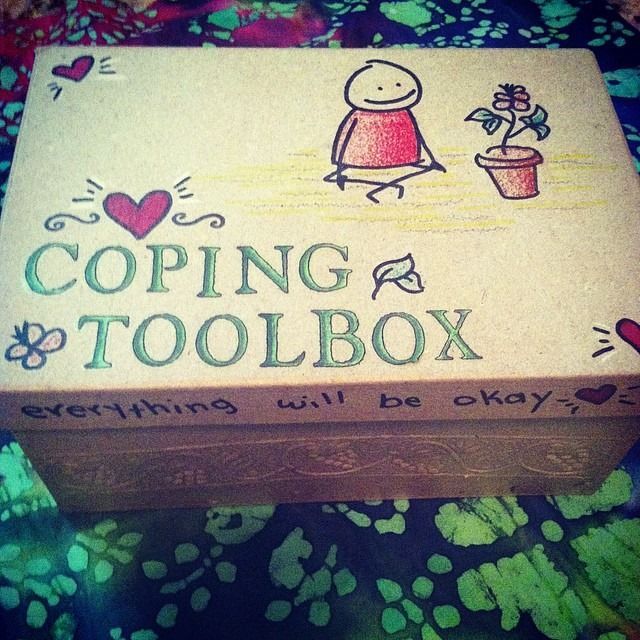
15. Teach distracting skills: shift gears and orient to the present moment.  Go from “what if” to “what is”.   Younger children can turn to a coping box, older ones to a Calm-Harm app. 


When doing something they feel is risky, tell themselves they are excited rather than nervous or anxious.  It can change the body’s response. 

16. Set a good example of how to handle stress.  If you fly off the handle, they are less likely to have calm responses to stress.

17. Get them checked out by a doctor to make sure the problems aren’t physical.  Maybe the stomach aches are from a dairy allergy instead of school stress.  


Maybe the “not feeling well” is from Lime disease and not anxiety.  Also, if the anxiety becomes disabling, see a doctor.  They may need medication or therapy.


But if it is stress, learning how to handle it as a child will bless them all of their lives.  So many of us as adults don’t know how to cope with stress and we become crippled emotionally and sick physically.  Our children, properly trained,  will be able to use stress as an energizer, rather than a drain on their emotions and functions.

Related image